

When we talk about history, our stories tend to drift to a person, a place, or event – almost always in relation to human activity. We trace our steps back through time to relive the moments and experiences of who and what came before us. We discuss art and architecture. Advances in civilization. Major discoveries and inventions. What human hands have built and what human hands have destroyed. We, as humans, seem to have this insatiable desire for development and progress. Our war machine constantly churns. So much of what once was could never withstand the test of time – not with our endless need for consumption and our compulsion toward destruction. A great many things have been lost as a result. Cut down and cut short by ballot, bullet, bomb, or bulldozer.
Just like people, places have memories. Their stories, their trauma, their growth and their decline are all experienced – as we experience our own. Just as the body keeps the score, so too does the land. It holds onto its history. There is energy and its expression – something that can be felt as well as seen. We bear witness to art and architecture. To creation and destruction. To invention and evolution. And none is the result of human hands. Because these things are not man made. It is the work of mother nature and mother nature alone.
But we don’t often visit a wild place to experience it beyond what we see before our eyes in the present day. If we want a history lesson, we go to a museum. Most likely, we’re out in nature for the trees, never questioning their age or existence. Or perhaps we are there for a scenic view or some destination water feature. Who doesn’t love a waterfall? There are various trails to trek or a summit to ascend. Could be pretty… or could be pretty unremarkable – that is, if we even bother to pay attention to where we are. How the majority of us experience the natural world today is a discussion in and of itself. To be IN nature, WITH nature, SURROUNDED by nature, and still somehow folks remain so disconnected from it. It is a byproduct of our modern society – to maintain these dysfunctional, detached, and disengaged relationships – with each other, with our communities, and with our surroundings. That has to change. As we work to build more meaningful and authentic connections with ourselves and with one another, so too, must we build more meaningful and authentic connections with the land.
What did these mountains, hills, and boulders bear witness to? As humans picked clean the bones of a place? As their communities became barren wastelands? As their kin was cut from the root? As their soils eroded and wildfires burned? How long have they waited for their new neighbors to seed, take root, and rebuild what was lost?
What did this place feel like before? Were land spirits present and alive? What beings called it home? How many trees were felled? How much ground was paved over? How much wetland was dried up and filled in? What was misplaced? What might now be extinct or endangered? How young is the flora in comparison to the age of the land? How fortunate is a natural area to have escaped development in the name of progress?
A Natural Relic
By 1900, the forests of Pennsylvania were devastated – with our state having lost more than 60 percent of them. The flattened landscape left was prone to soil erosion and wildfires – nothing but smoke and stumps. In a state of 28.7 million acres that was once almost completely tree covered, only a few hundred acres of true old growth was spared. The rest fell victim to the great deforestation – an unregulated logging industry mining for building materials, ship masts, and for charcoal. Our regional hemlocks and oaks were felled and stripped of their bark for leather making in the tannery business. All of this happening all around it, and yet, this boreal relic from the land before time remained.
To someone unfamiliar, the Tannersville Cranberry Bog could be considered unremarkable – with its stunted trees, precarious “walking” conditions, lack of plant diversity (at least at first glance), less than scenic views, and required guided tours. But in reality, the bog is anything but unremarkable.
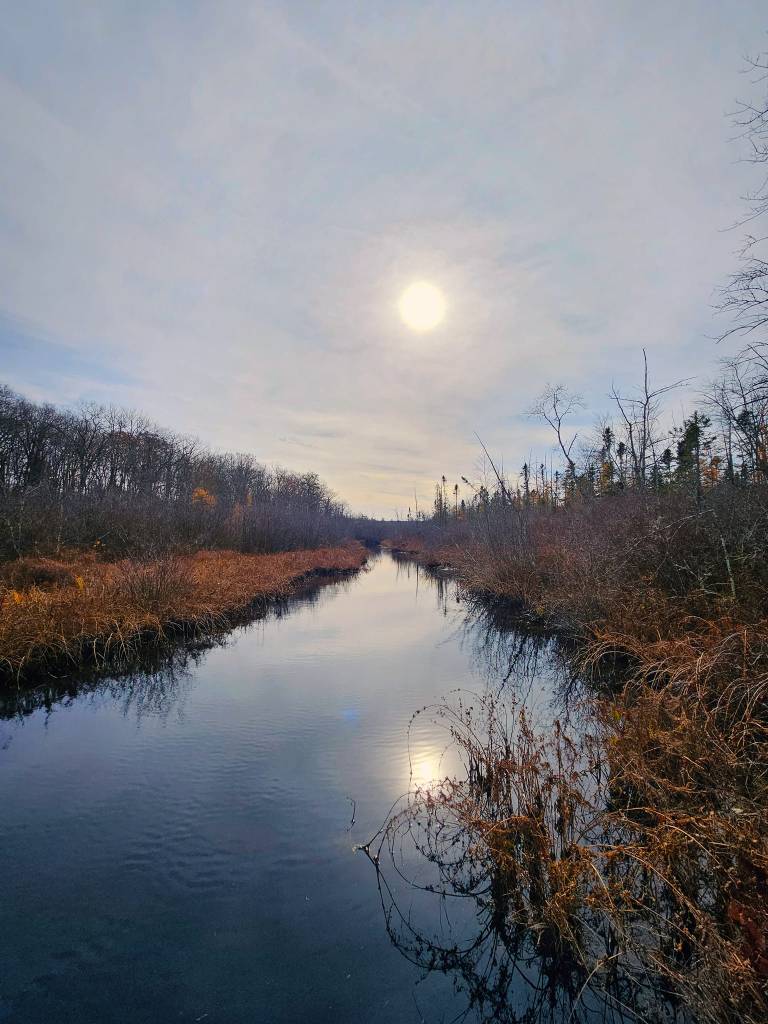
Thousands of years ago, a glacial lake once occupied this space that is now known as the Tannersville Cranberry Bog – a 1,000 acres of land protected under The Nature Conservancy. A bog like this is created over hundreds or thousands of years, formed when plant matter decays in a lake and begins to fill it. Peat deposits start building as the plants die and decay and the water turns acidic. The water is collected by precipitation and is held there by these layers through absorption. Bogs are freshwater, and in spite of the large amounts of decaying plant matter, they are very poor in nutrients. While the ice and lake have long receded, the bog remains – smack dab in the middle of the civilization that now surrounds it. This ecosystem represents an intricate transformation that took place over thousands of years – impossible to replace or replicate.
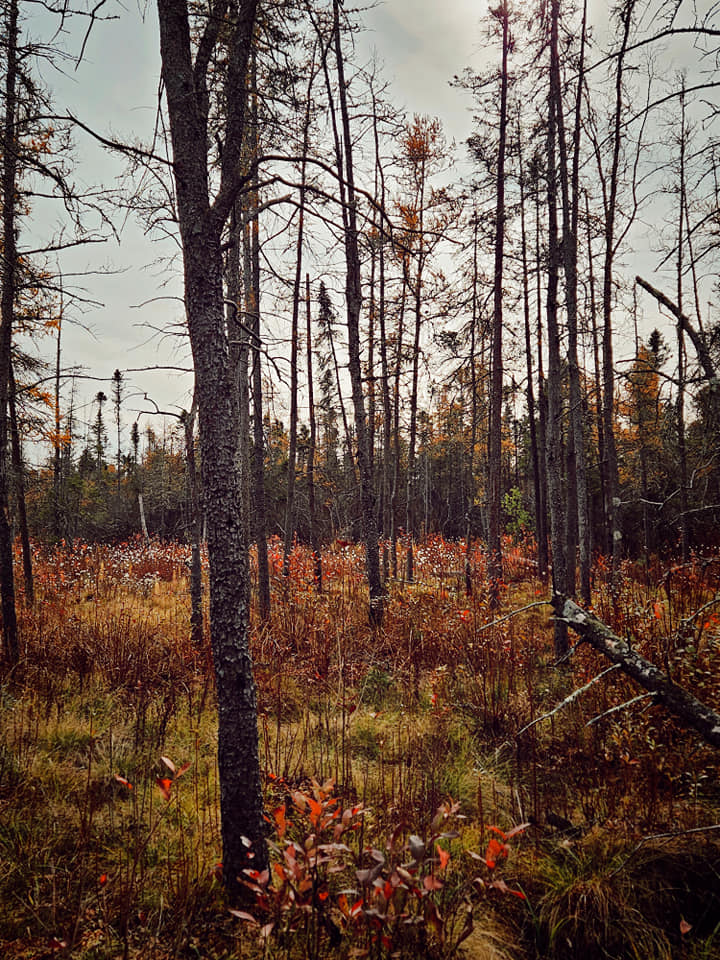
A considerable portion of the bog is covered with a boreal forest of black spruce and tamarack, two conifers normally found in Canada, at the southern limit of their range. It is the presence of these two Canadian conifers amidst an array of plant life unique to a boreal bog that makes the Tannersville Cranberry Bog such an incredible place to experience.
The beauty of the bog is hidden in its history, beneath its surface, in its ecological function, and the particular life it sustains within its unique ecosystem. The site was designated a National Natural Landmark in December 1974. The Cranberry Bog is nothing short of a natural treasure, a geological remnant of a long-ago ice age.
What’s a Bog?
A bog is one of several different types of wetlands that also include marshes, swamps, and fens. Each has their own distinct characteristics – defined by the flora and fauna they support. They are places which are neither land nor water. While other types of wetlands are very nutrient-rich, bogs are characterized by their lack of nutrients and relative inability to support large plant life. They have no drainage or inflow. No water gets in other than rain or snow and no water gets out except for evaporation. Bogs support plant and animal life that have adapted towards water-logged conditions, low nutrients, and acidic waters. The conditions of this unique habitat make them critically important to the species that live there.
The plant life you’ll find are high bush blueberry, leatherleaf, cranberry, sheep laurel, bog laurel, swamp azalea, and on the outskirts, rhododendron. Two others, bog rosemary and Labrador tea, are among the state’s rarer plants. Sedges and other plants typical of wetlands dominate the more nutrient-rich portions. There are two species of insectivores: the gorgeous, vibrant pitcher plant and alien-like sundew, which are found in the more open, sunny areas of the bog. Other beautiful and fascinating bog plants include grass-pink orchid, white-fringed orchid, rose pogonia, yellow lady slipper, and (formerly recorded but not seen in recent years) heart-leaf twayblade. There are also wild calla, cotton grass, poison sumac, the rare yellow-eyed grass and the rare dwarf mistletoe which grows as a parasite on the black spruce.
Bogs serve an incredibly important function – acting like a sponge – with vegetation and detritus breaking down incredibly slowly. Our sponge, the Cranberry, cleanses and controls pollution throughout the Pocono Creek watershed. Bogs aid in the proper cycling of nutrients and pollutants. They are carbon sinks, infinitely valuable in their ability to remove this greenhouse gas from the atmosphere due to their remarkably slow rate of decay. They are considered one of the most valuable ecosystems in the world.
A Land Before Time
Walking the bog is like stepping through a portal and transporting to a different time. Here I am, standing in a boreal ecosystem formed by glaciers thousands of years ago. I shut out the modern world and soak in something prehistoric – as if I were the peat moss itself. Everything is quiet and still. Civilization and man made sounds are obscured. The bog, both in aesthetics and function, is in essence, a giant sponge – densely packed with sphagnum moss, also known as peat moss. This sphagnum is super absorbent – plushy like a pillow. This, coupled with layers of dead vegetation beneath, create a bog’s foundation.
The bog is a tactile place. The textures are exquisite. Lichen of many species cover bark and branches. There are the sharp edges of a sedge grass blade. The delicate hairs of a carnivorous pitcher plant. The vibrant cranberry globes in stark contrast to the muted brown landscape of autumn. The plush blankets of moss with their brilliant hues which vary in color – emerald, lime, amber, crimson, and sepia tones. Even the otter scat, left atop the bog boardwalk, has remnants of undigested crayfish shells, flecking as the piles deteriorate.
There is a duality in this place – both fluid and solid, velvety and dense. There’s a richness to its water, steeped this vibrant and luxurious brown. It sits below, alongside, and within the spaces between hummocks, all at some indiscernible depth. These floating islands house the life above ground and are smattered across the surface of the bog. Depending where, to step off a hummock, might mean losing your boot – sinking a few inches, a foot, or several.
This bog emits an ancient energy – purposeful and radiant in its deliberate infiniteness. Here, you can see and experience life in slow motion. Here, time is both frozen and unbound. To wander the bog, is to let modern civilization slip away and in its stead, experience an extraordinary place of the past, one that would be irreplaceable if ever it were damaged or destroyed.
PLEASE NOTE: Because of its fragile nature, the bog can only be visited during regularly scheduled walks by guided access only. Find out more about the Tannersville Cranberry Bog HERE






 this wild thing, ltd