I have always felt most at home among trees, moss-covered stones, fallen logs, and countless living beings that make up the wild world. Long before I had language for it, I understood nature not as a backdrop to life, but as something alive that I belong to. Like many, I grew up learning nature from books and school, but I also learned nature by wandering, and by the teachings of my grandfather and how he experienced the natural world. I spent many of my days disappearing for hours into the woods and overgrown places where the world felt quieter, safer, and honestly, more like home.
As I grew older, I began to notice how disconnected modern life was from that relationship, and that if I was to “belong” that it demanded the same of me. Out of survival, out of seeking acceptance, and also some semblance of normalcy, I joined the rat race pace, the noise, and the constant consumption. The distance from myself and the wild grew further. Alongside my love for the living world came grief — for disappearing wild places, for species in decline, for rivers and forests treated as resources instead of relatives, and for the quiet loneliness that I carried after being separated from my meaningful connection with nature.
Again and again, I found myself returning outdoors not just for recreation, but for grounding, clarity, healing, and perspective. Nature became refuge, teacher, mirror, and reminder. It taught me to slow down, to pay attention, to listen more closely, and to understand that belonging is not something we achieve, but something we remember.
the feralist.
My name is Steph and I am a feralist. No typical professional title seemed to fit me, and so I created this one, as someone who is learning how to be a human animal again. Paying attention to the land, listening to my instincts, and moving through the world with greater presence and curiosity. A feralist is part naturalist, part storyteller, part guide back to the parts of ourselves we’ve forgotten. The work is less about teaching and more about remembering, returning to a slower, truer way of living that brings us back into real relationship with nature, with each other, and with our own wildness.

rewilding
To me, rewilding is not about rejecting humanity, escaping into the wilderness, or romanticizing some imagined past. It is about remembering relationship. It is the slow and often lifelong process of returning to reciprocity with the living world — learning to pay attention again, to move with greater humility, and to recognize that we are not separate from nature, but part of it.
Rewilding can be ecological, emotional, spiritual, and communal all at once. It lives in restoring habitats, but also in restoring wonder, presence, belonging, and care. It is found in slowing down enough to hear birdsong, knowing the names of local plants and waterways, grieving what has been lost, protecting what remains, and rebuilding meaningful relationships with both people and place. For me, rewilding is about listening deeply enough for the natural world to shape me back into a more connected, compassionate, and fully alive human animal.
why this work matters now
We are living in a time of immense disconnection — from the land, from one another, and often from ourselves. I believe many of us are carrying a deep ache for belonging that cannot be solved through consumption, productivity, or constant distraction. The living world still offers another way. My life and this work addresses:
- ecological grief
- disconnection
- modern overwhelm
- loneliness
- and loss of relationship with the Earth
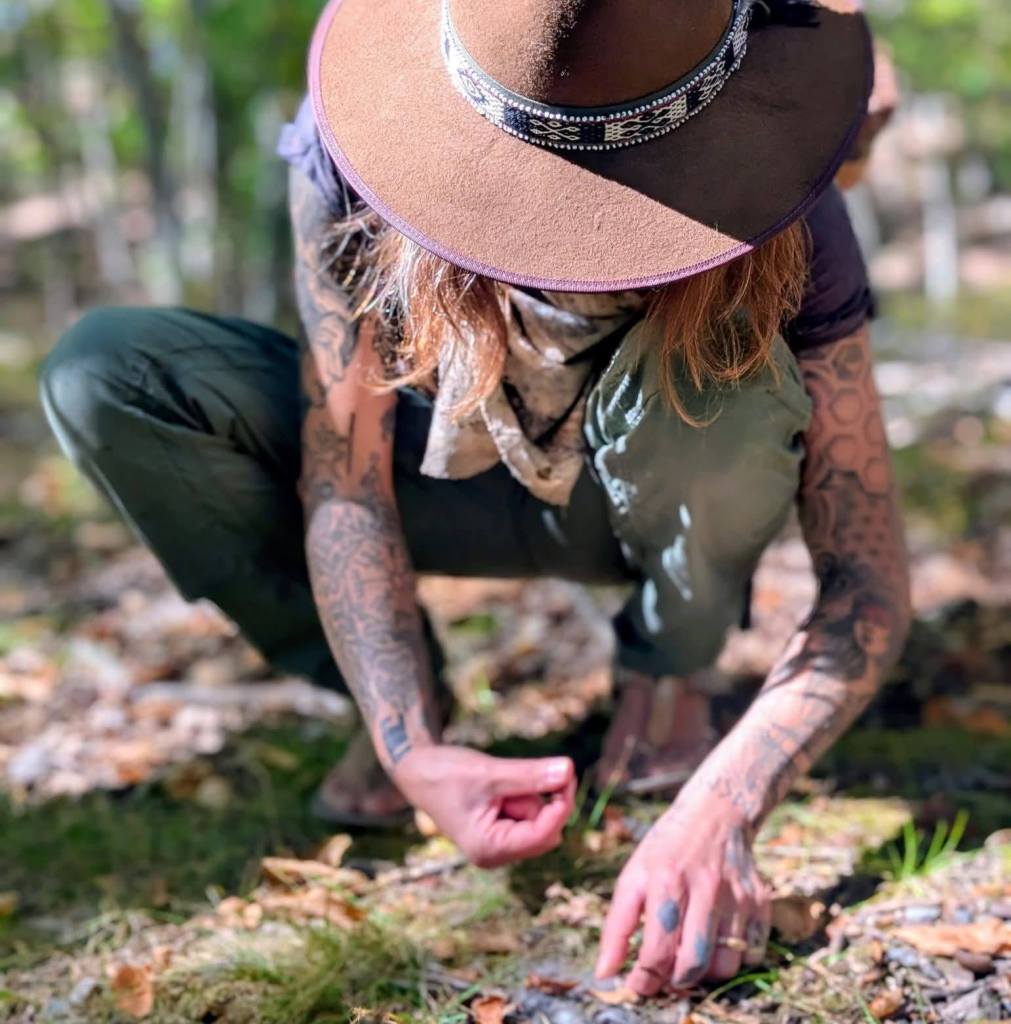
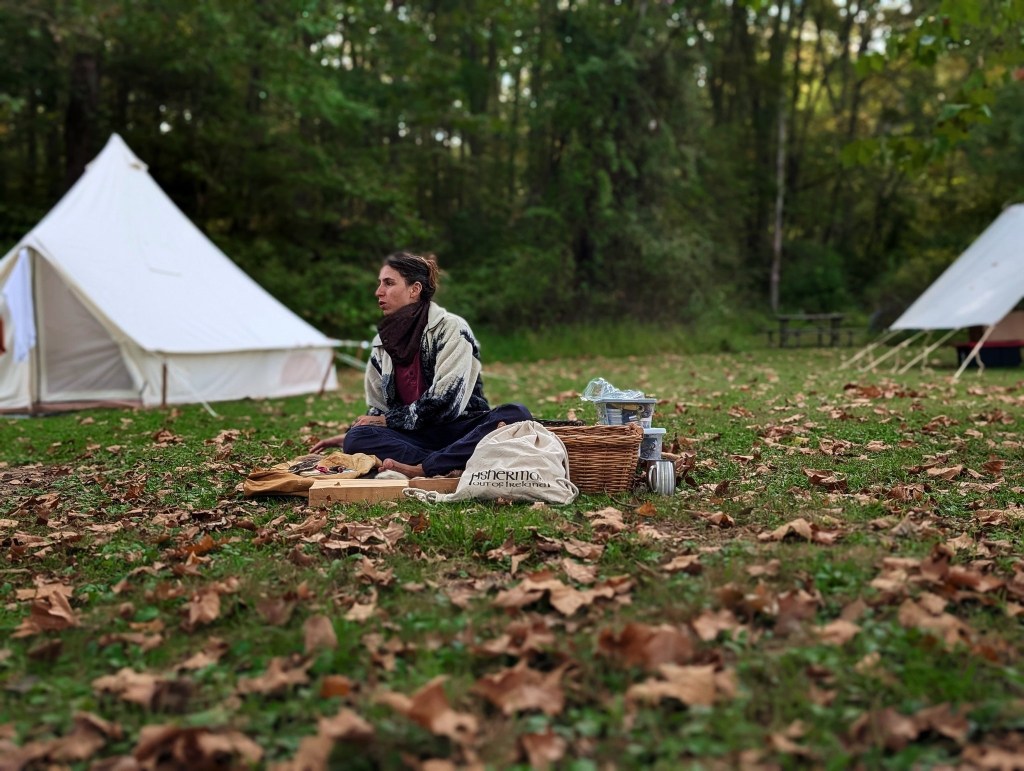
my approach to community and nature connection
I’m not interested in gatekeeping the natural world behind expertise or perfection. I believe deep connection begins with attention, and learning to notice, to listen, and to move through the world with curiosity and care.
- The natural world is not a resource, but a relationship.
- Conservation begins with connection.
- Wildness lives within us.
- Wonder is essential.
- Slowness matters.
- Reciprocity matters.
- Community matters.
- Curiosity is key.
- Accessibility/Inclusivity
- Shared Learning and Observation
- Presence and Slowing Down
- Relationship, not Performance.
- Connection, not Commodification.
building community.
As the creator of this wild thing – I hope what grows from it is a refuge for the feral-hearted, like me. A reclamation. A remembering. A way back. A slow return to wildness. To a place where instinct meets awareness, where the land becomes a companion, and where as humans, we remember what it’s like to belong to something larger than ourselves.
I’d love to help others reconnect with their inner wilderness: the sensory intelligence, the ancestral knowing, the quiet courage, and the deep presence that comes from being in relationship with the land. Everything isn’t all about “improving” and “advancing” ourselves. Sometimes, it’s about coming home to ourselves. Alongside learning, we must also welcome unlearning, unbecoming, and undoing. We must invite a version of humanity that listens, feels, tracks, notices, and belongs. That moves through the world with presence, curiosity, and wonder. And that understands that the wild is a part of our community, and that it is also a guide, a teacher, and an ally.
our life.
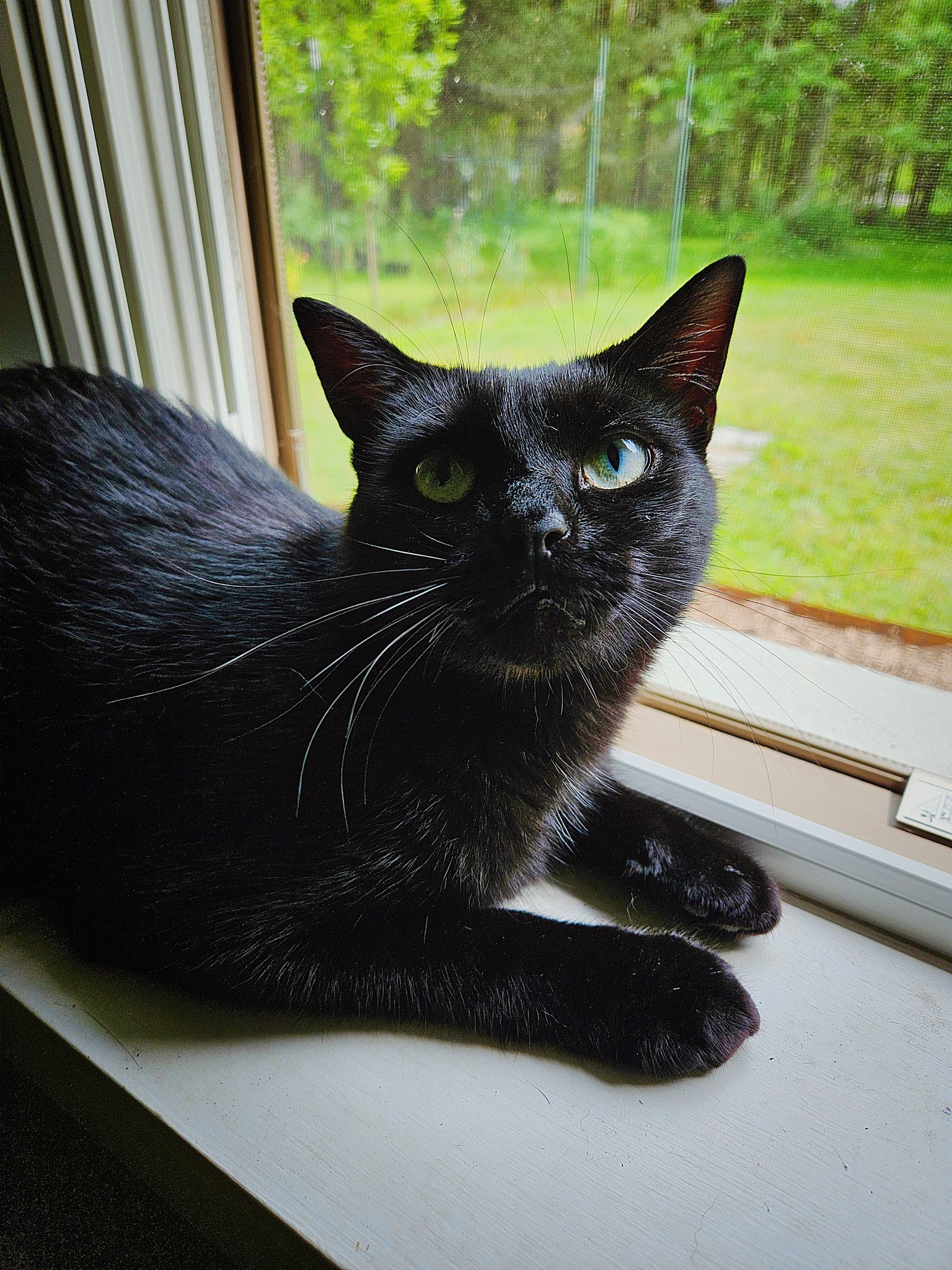
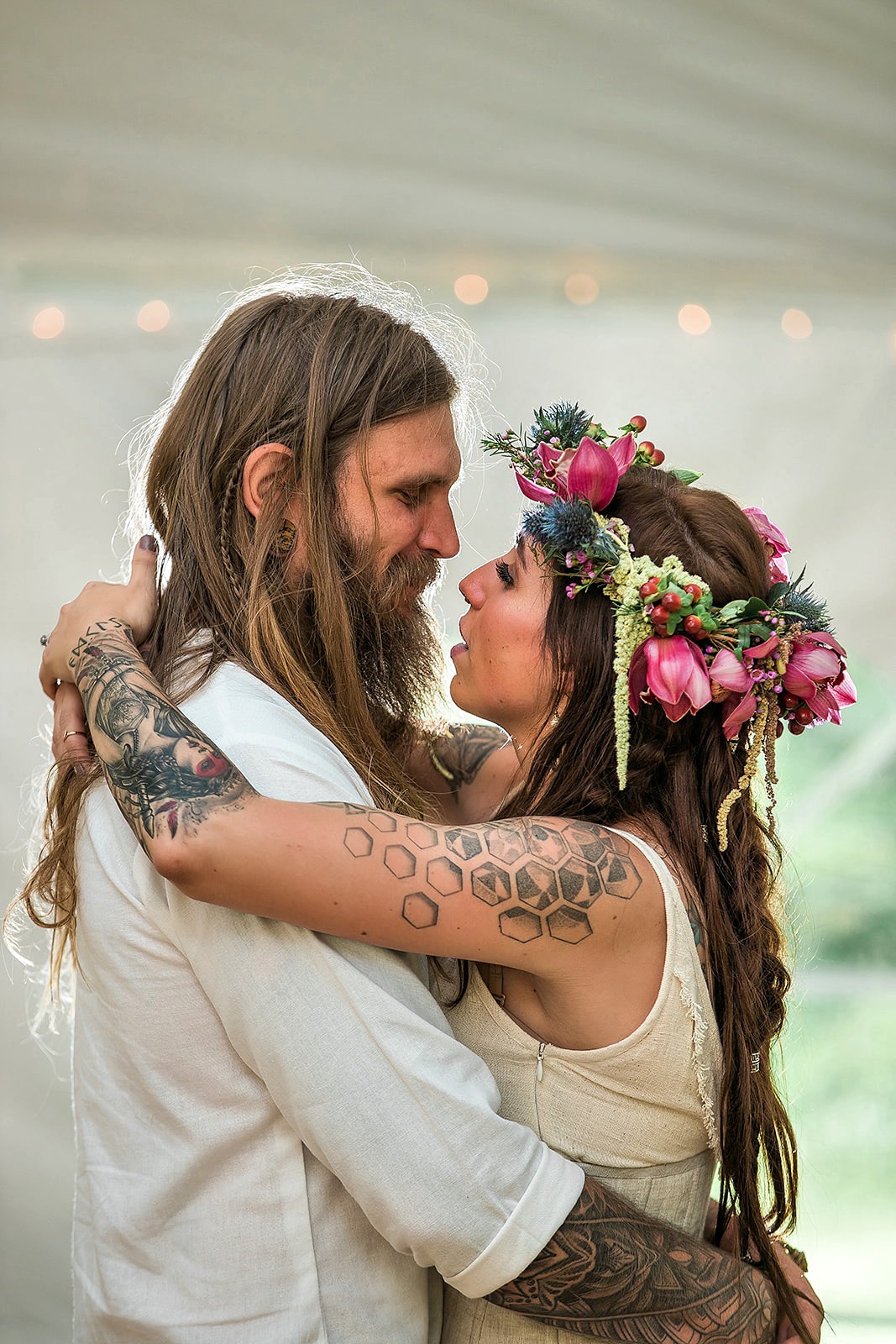
I live in the Northeast in a small stone cabin tucked into a few acres of woodland. I share this home with my husband, our Italian Mastiff, Koda, and our cats, Jake and Woody. We also carry the memory of our 17-year-old tuxedo cat, Squeak, who we lost in January 2025 and who is still very much part of our story. We also have acreage where we will be building a homestead in the coming years.
I’ve always felt a deep kinship with the natural world, but that connection has only intensified since moving here. There’s a whole community in our backyard, animals, plants, spirits, the quiet presence of the land itself. They aren’t “other” to us. They’re kin.
Together, we’re working to create a biodiverse habitat that supports coexistence and contributes to local conservation. It’s the outward expression of our inner rewilding, an ongoing effort to build reciprocity and a respectful relationship with the land we call home. As we do this, we’re rewilding our own hearts too, learning to live more simply and intentionally while creating a sanctuary for humans, animals, birds, and all the tiny beings who belong here. Bugs included. The more the merrier. The wilder, the better.
experience.
I’ve been in the workforce ever since I was thirteen years old, way back when, pinching pierogis for cash under the table for food money. My career path, much like my life, was not a straight trajectory nor a gradual ascension. It was more like an indecisive squirrel in the middle of the road. Toxic and chaotic upbringings will do that to you. Where I am today, has as much to do with “unlearning” and “unbecoming” as it did with learning and becoming.
What we bring to the table, to our circles and communities, are a culmination of so much more than our degrees and certifications. Our unique gifts, our individual passions and purpose, our dreams and ideas, our trials and tribulations, our struggles, our triumphs, and the collective of our lived experiences should not be discounted.
- BS Psychology
- MA Communications
- Advanced Certification in Ecopsychology
- Creative Writer and Storyteller
- 10+ years in Nonprofit Management
- Watershed Advocate
our home.

our family.





our wild residents.
These are the wild and feathered friends we have on the property who aren’t migrants just passing through. They’re either here year round as permanent residents or seasonally to nest and raise young.
- Male Pileated Woodpecker
- Eastern Phoebe
- Downy Woodpecker
- Hairy Woodpecker
- American Robins
- Small fleet of Dark-eyed Juncos
- White-breasted Nuthatch family
- Black-capped Chickadee
- Wiry crew of Tufted Titmice
- Pair of Northern Cardinals
- Resident Groundhog
- Red Squirrel (named Hazel)
- Gray Squirrels
- Cottontail Rabbit
- Various Sparrows
- Several White-tailed Deer
- Turkeys
- Red-bellied Woodpecker
- Hummingbirds
- Flying Squirrels
- Toads (so many toads)
- Gray Tree Frog
- Wood Frog
- Eastern Newt (Red Efts)
- Raven
- Red-eyed Vireo
- Ovenbird
- Carolina Wren
- Brown Creeper

